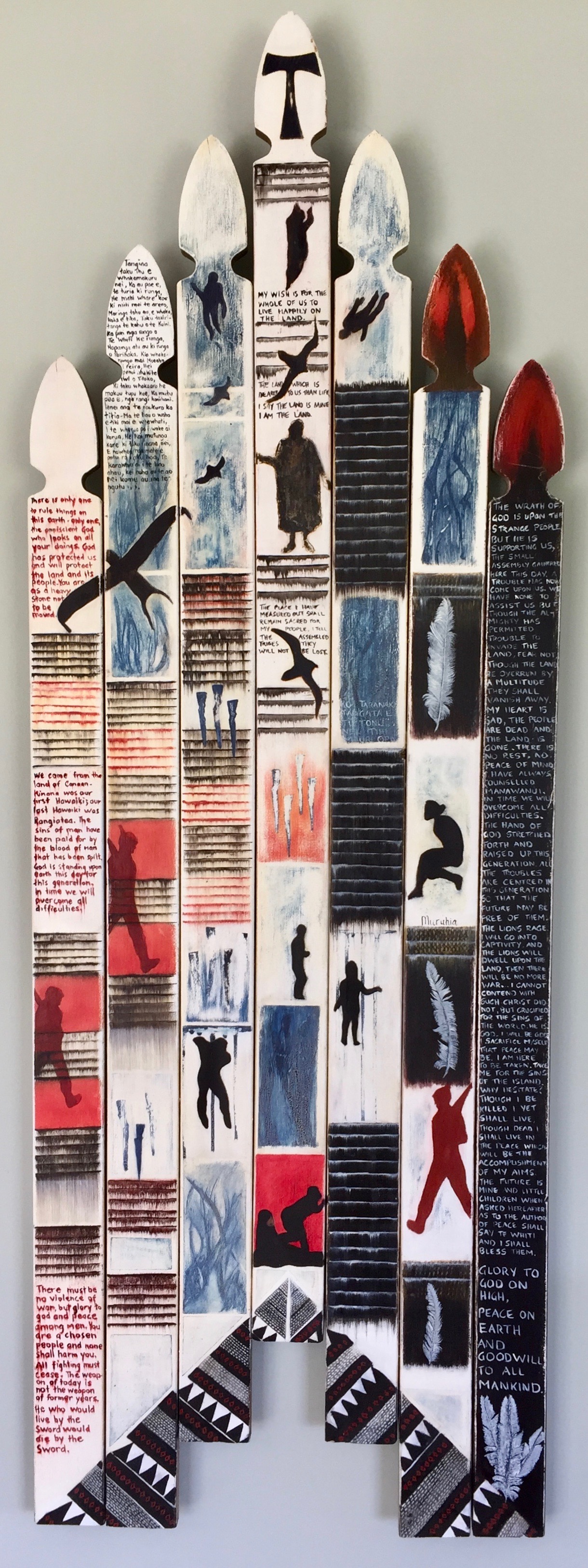
“Muruhia”, Oil paint, ink, rabbit skin gesso, on found colonial fence-post
MALCOLM SMITH GALLERY, Howick, Tāmaki Makaurau, 2012, “Korero” Exhibition, a fusion of poetry and visual arts, Selected artists asked to participate by curator of Malcolm Smith Gallery.
My work responds to a poem by Bernard Gadd about the invasion of Parihaka in 1881, with additional reference drawn from Ask That Mountain by Dick Scott. The imagery symbolises the peaceful resistance and teachings of Te Whiti o Rongomai, Tohu Kākahi, and the people of Parihaka.
The repeated lines reference the plough lines—an act of passive resistance carried out by Te Whiti and his followers prior to the confiscation of their land and the violent invasion of their village. The Tau Cross reflects Te Whiti’s belief system, grounded in traditional Māori knowledge and values, interwoven with elements of Christianity. The Parihaka peace feather represents non-violence and moral strength.
At the base of the work sits Mount Taranaki, surrounded by tukutuku patterns specific to the region, anchoring the piece firmly in place and whakapapa. The written text throughout the work consists of sermons spoken by Te Whiti to his people in the lead-up to the invasion, reinforcing the themes of peace, resilience, and spiritual conviction.
The work is painted on a recycled colonial-style white picket fence, a deliberate material choice that references colonial presence, land ownership, and imposed boundaries, while reclaiming the surface as a site of memory, resistance, and storytelling.
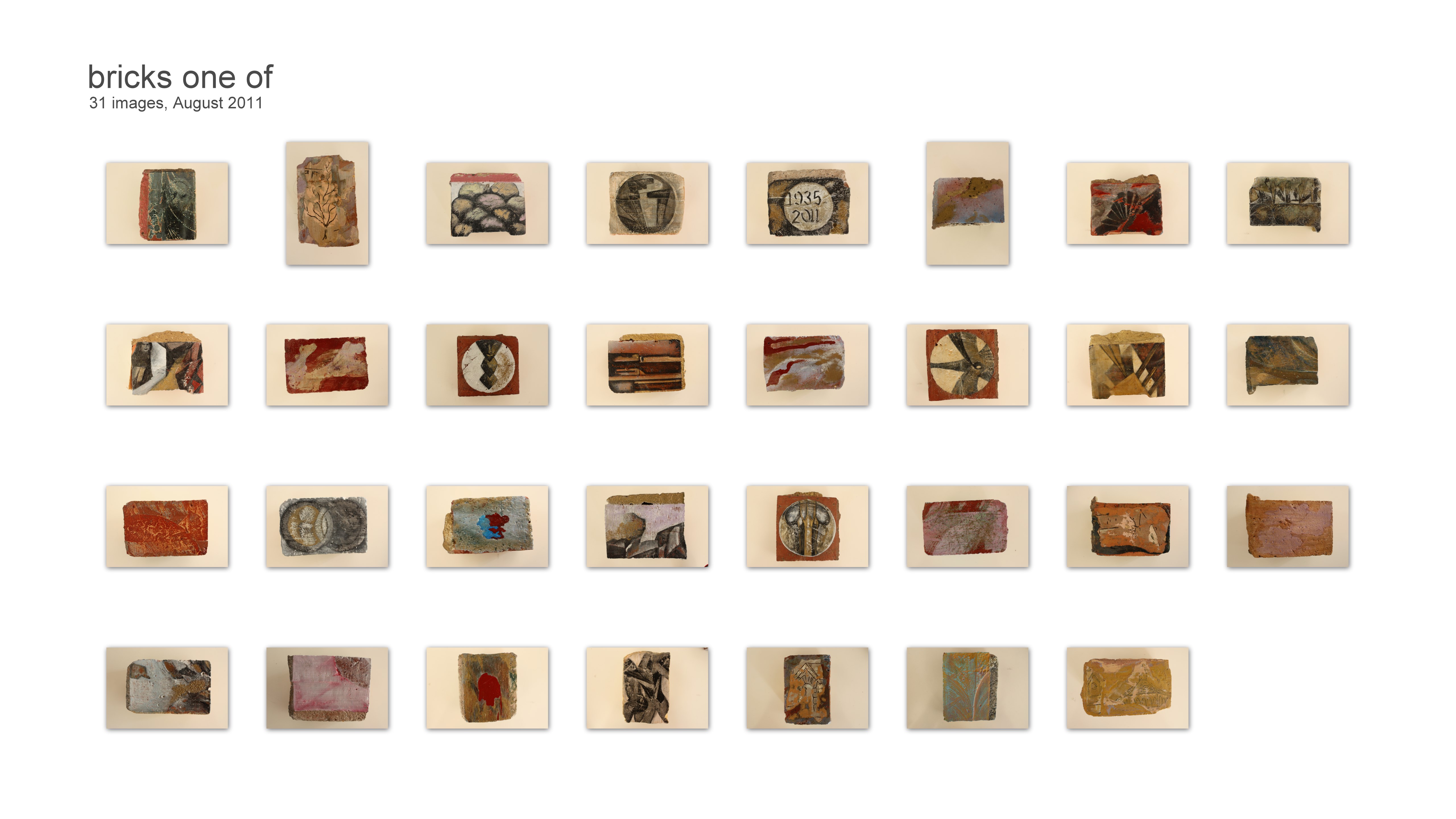
The Architecture of Happiness, How Diversity Works Exhibition
Studio One, Toi Tu, Ponsonby Rd, Tāmaki Makaurau, 2011
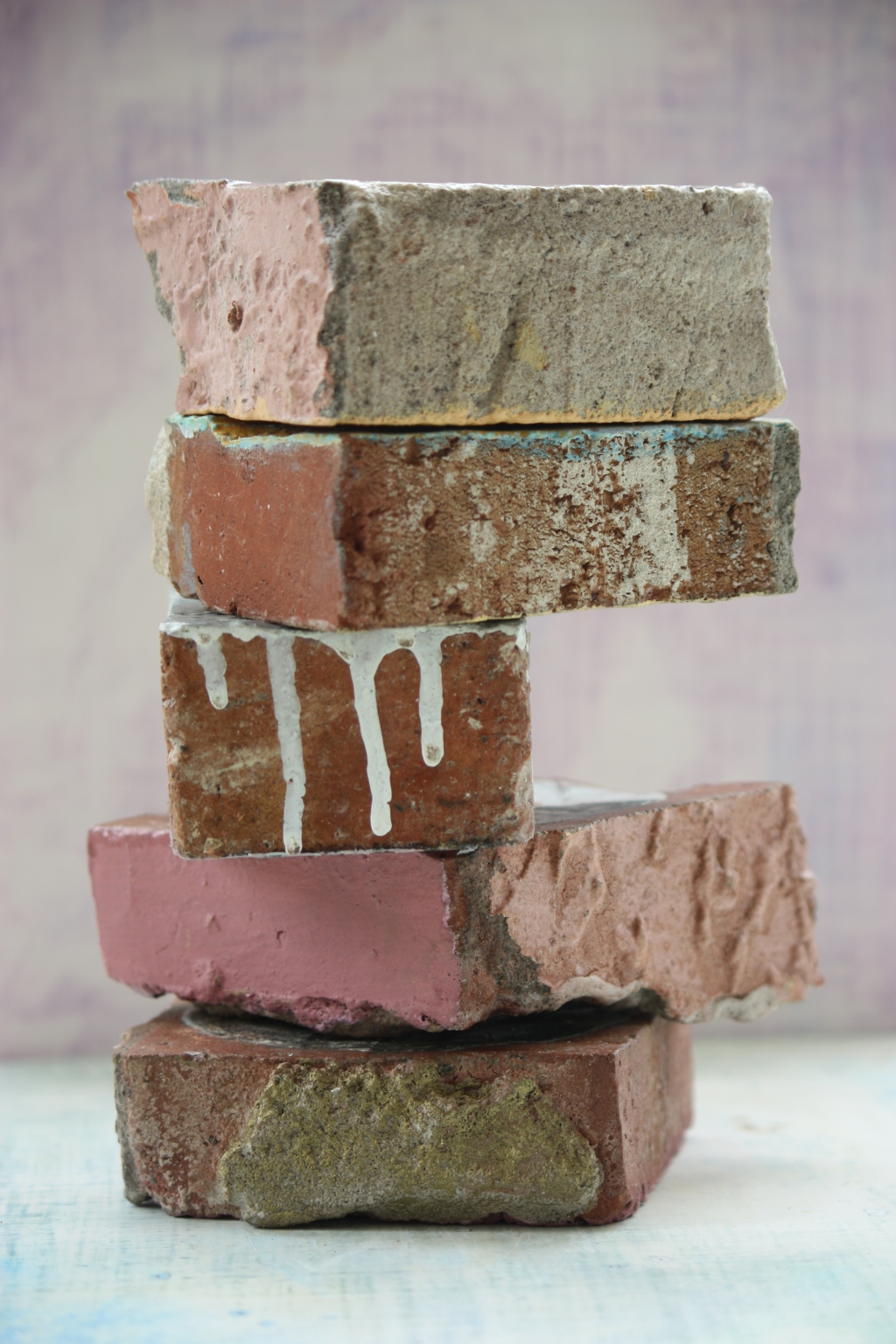
Following participation in a six-week community occupation and protest at Turua Street, St Heliers, three unique seaside Art Deco homes—listed by the Heritage Trust—were ultimately demolished. This body of work was created over the following year using bricks salvaged from the site, drawing attention to the ongoing vulnerability of our architectural heritage.
A selection of painted bricks was initially presented as a floor installation, inviting viewers to look down into the work as if encountering a pile of discarded rubble. While functioning as an installation in its own right, the bricks were later sold individually. This act echoed the fragmentation and loss of the original buildings, while engaging with the human desire to retain small, tangible remnants of history.
Each brick is painted in egg tempera on gesso. Brick sizes vary, approximately 110 × 110 mm.
For more information visit:
http://diversityworks.co.nz/news/auckland-embraces-new-ideas-about-diversity/
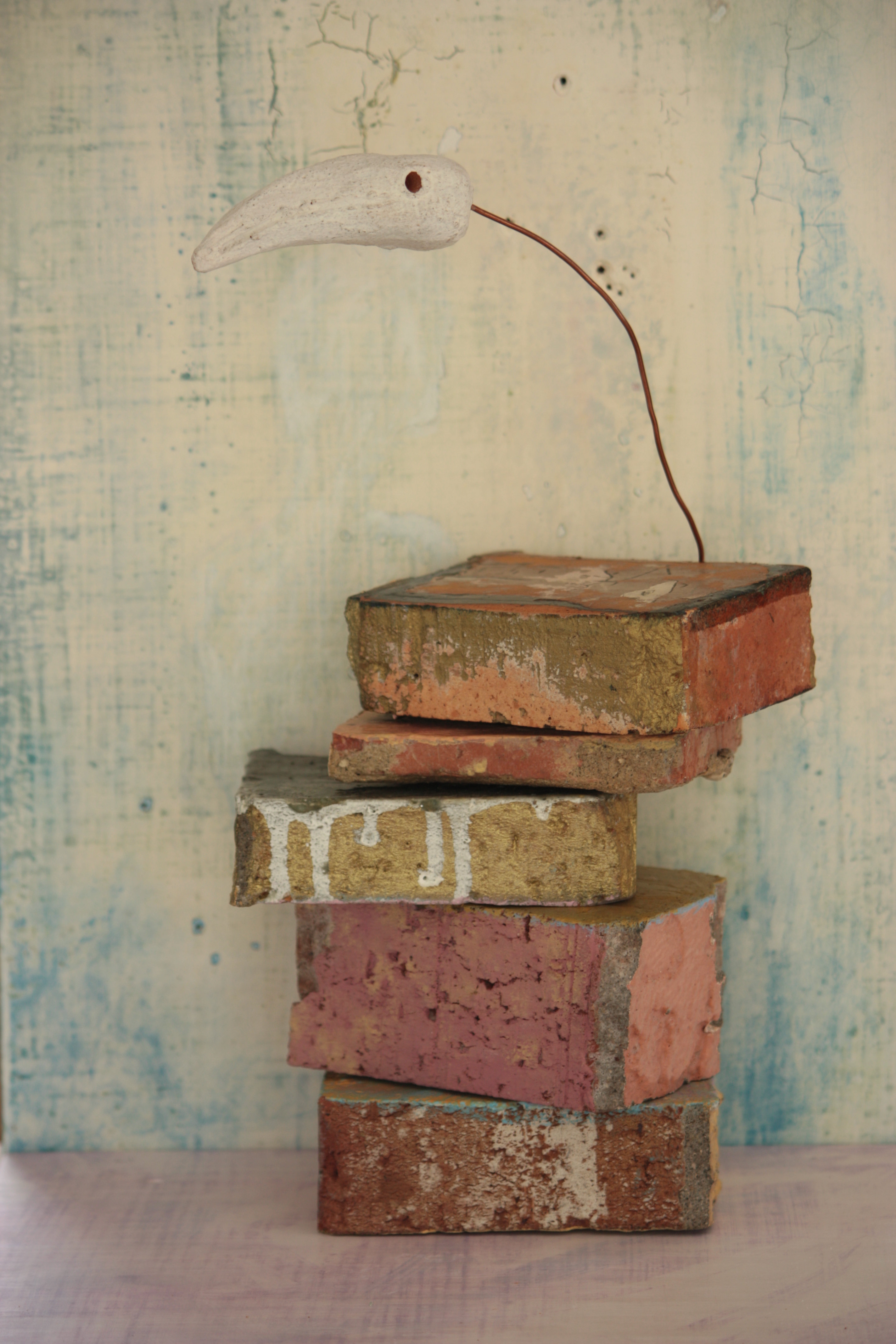
2012 “Claybird”, Selected Finalist in the Estuary Art Awards, Malcolm Smith Gallery
Ink Jet Print on photographic paper, (edition of 10, 3 sold).
This photograph brings together an assemblage of made and found objects. It includes a clay bird beak cast from a mould taken from a bird skull found at Port Waikato after a storm, an egg tempera painting in the background, and bricks salvaged from the demolition site at Turua Street. Together, these elements connect processes of making, loss, and recovery, linking personal acts of collection with wider narratives of place and disappearance.
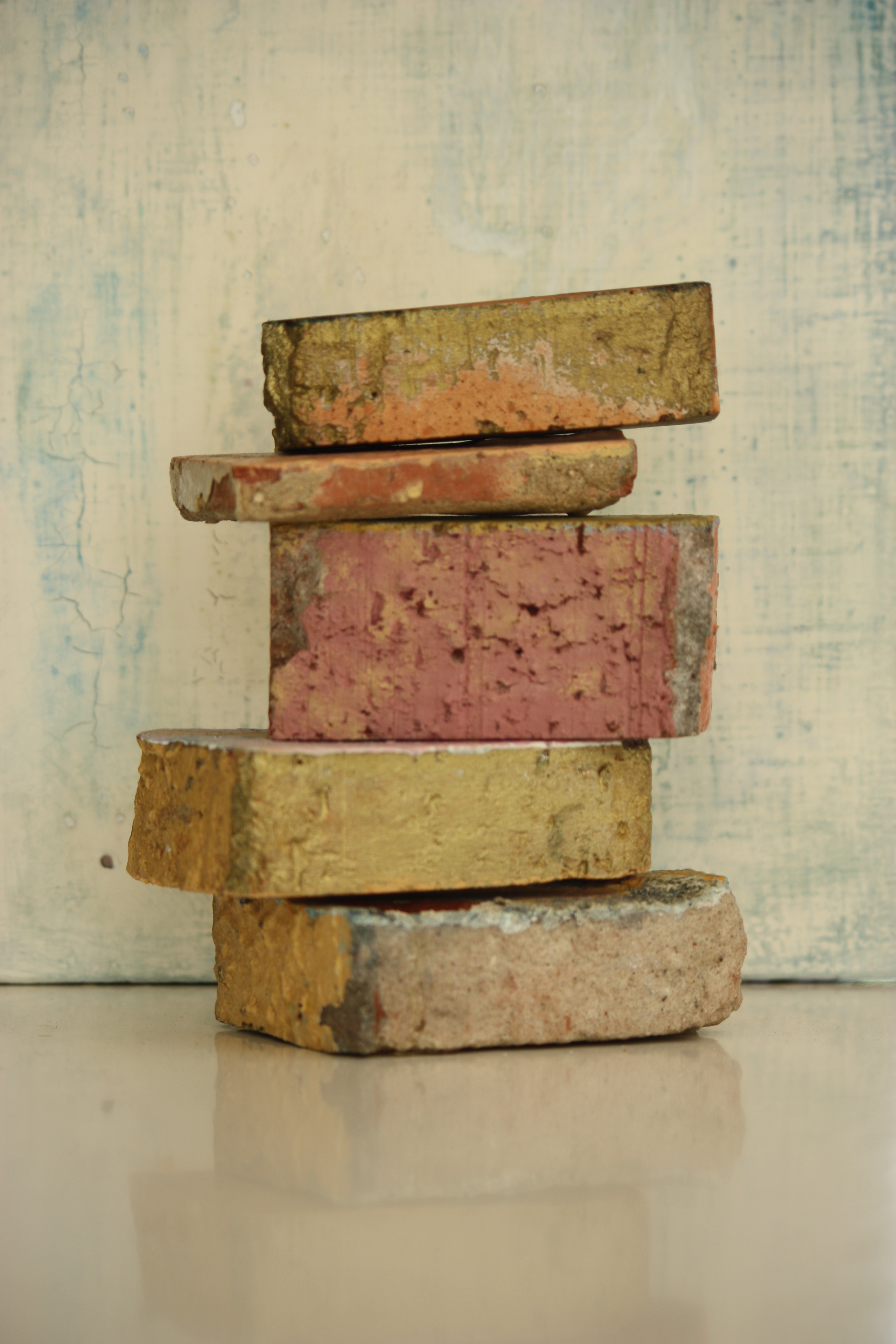
‘Brickstack’, Square Art pop-up show, Newmarket Square.
Salvaged bricks from the Turua Street demolition, Ink Jet print on photographic paper, Edition of 10 (2 sold)

‘Brickstack’, Square Art pop-up show, Newmarket Square
Salvaged bricks from the Turua Street demolition, Ink Jet print on photographic paper (edition of 10, 2 sold)

‘Brickstack’, Square Art pop-up show, Newmarket Square
Salvaged bricks from the Turua Street demolition, Ink Jet print on photographic paper (edition of 10, 1 sold)
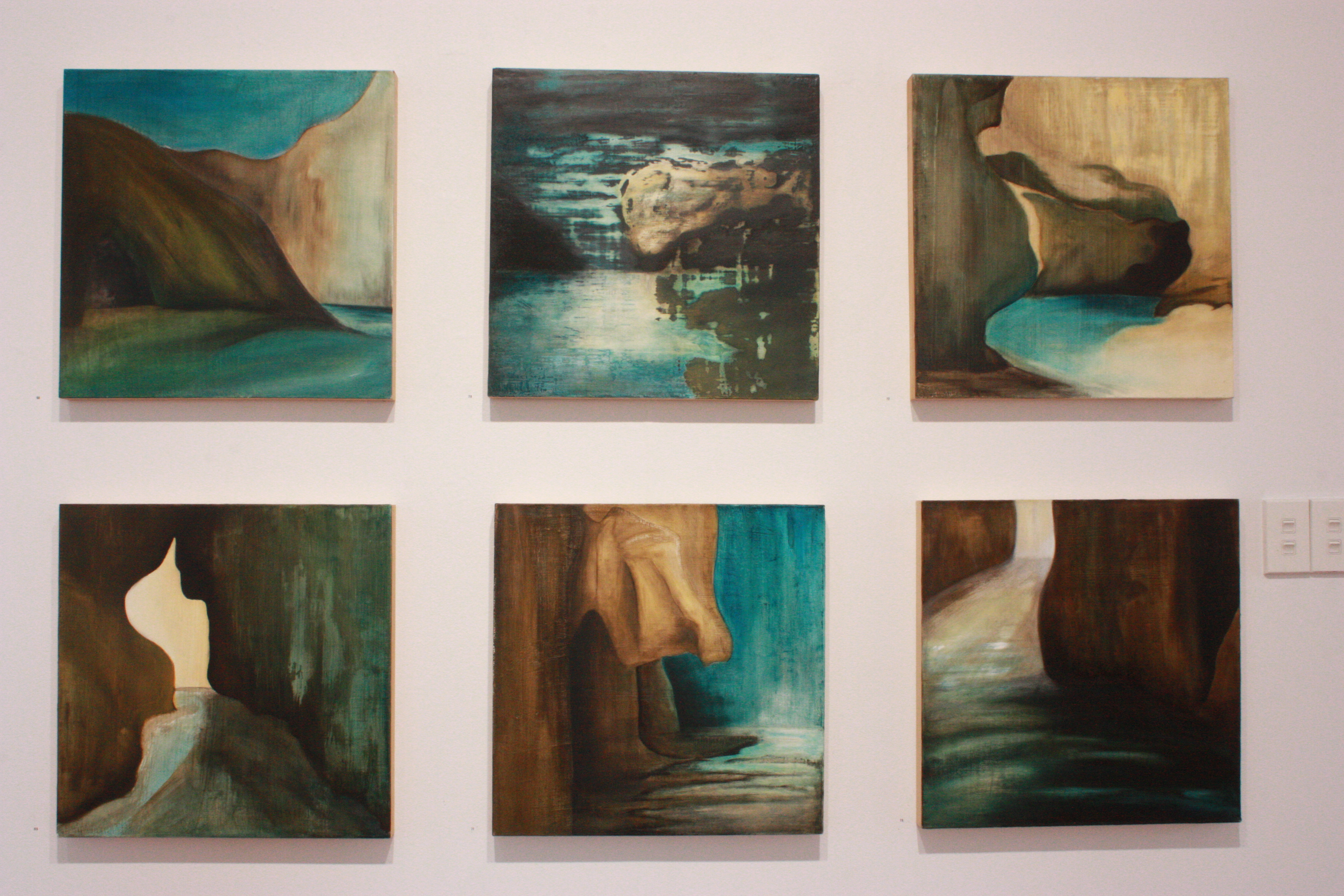
Coast and Cave, 2009, Oil paint on rabbit-skin gesso on board, all 500x500mm
Studio One, Toi Tu, Ponsonby Rd, Tāmaki Makaurau
I have always been both fascinated by, and afraid of, entering caves. Working on these paintings felt therapeutic—an intimate way of moving through that fear.
After spending summers on the West Coast at Piha, watching my children wander into the caves at South End and the northern end of the beach, I began researching New Zealand caves and early Māori cave drawings. This research led me to discover that some of my Ngāti Raukawa ancestors from the Kāpiti Coast may have been buried in caves on Kāpiti Island. Since then, caves have become a place of deep personal and historical fascination for me—sites of shelter, memory, and connection.
Nā Te Moana, Ki Aotearoa
From the Ocean, to Aotearoa, 2010.
Studio One, Toi Tu, Ponsonby Rd, Tāmaki Makaurau.
These two works are part of a series of three that speak to the ancestral journey to Aotearoa and my own connection to that history. The wheke (octopus) and paddle imagery reflect movement, navigation, and survival across Te Moana-nui-a-Kiwa. For many Pacific cultures, the octopus is a symbol of intelligence, adaptability, and endurance—qualities that resonate deeply when thinking about the long ocean voyages undertaken by our tūpuna.
Through whakapapa, Māori trace their origins back through generations of Pacific migration, with ancestors travelling by waka from Hawaiki to Aotearoa. These journeys relied on profound knowledge of the natural world—stars, winds, currents, and the behaviour of ocean life—knowledge carried, remembered, and passed on through generations. The paddle represents not only the physical act of voyaging, but also collective effort, cooperation, and trust in shared knowledge.
For me, these works are a way of acknowledging those journeys as living histories rather than distant myths. The wheke and paddle become markers of identity, linking past movement across oceans with ongoing movement through memory, culture, and belonging. They honour the courage and resourcefulness of my ancestors, while allowing me to situate myself within that continuing line of travel and return.
Oil paint, Calcium Carbonate and Rabbit Skin Glue, on re-cycled kauri ceiling boards.


 Jana Wood
Leave a comment